
Program
About the MFA in Art and Social Practice
The MFA in Art and Social Practice at Portland State University is a 90 credit, 3 year, interdisciplinary program focused on socially engaged art, community collaboration, and research-based practice. Recently included in Artsy’s list of The Top 15 Art Programs in the country, the program supports students in developing a sustainable, dialogic, and community-centered artistic practice. The program combines individual practice, group work, community partnerships, and experiential learning with diverse faculty. The program’s blend of critical and professional practice, alternative pedagogy, collaborative social engagement, and transdisciplinary exploration produces an immersive educational environment. As an extension of the program’s unique approach, graduate students have the opportunity to collaborate directly in ongoing projects.
The MFA program encourages students to shape the direction of their own education and continually develop the program as a whole. Students connect their art practice to research in the field of Social Practice through electives and community partnerships, promoting cross-disciplinary engagement. To support writing and web-based projects that offer documentation, critique, commentary and context for a field that is active and expanding, the program produces Social Forms of Art, an online journal that centers interviews as artistic research. Graduating students are offered the opportunity to design and teach their own class; they also each produce a graduate project, a public artist lecture surveying their work in the program, and a graduate publication that adds to the unique breadth of publications on socially engaged art emerging from the program.
Each Spring the program hosts Assembly, a co-authored social practice conference with workshops, lectures, and participatory projects. A Visiting Artist program creates exposure and sustained mentorship for students through the academic year. The Art & Social Practice Archive, an initiative housed in the PSU Library Special Collections, is the first public archive of ephemera related to art and social practice.
How We Learn
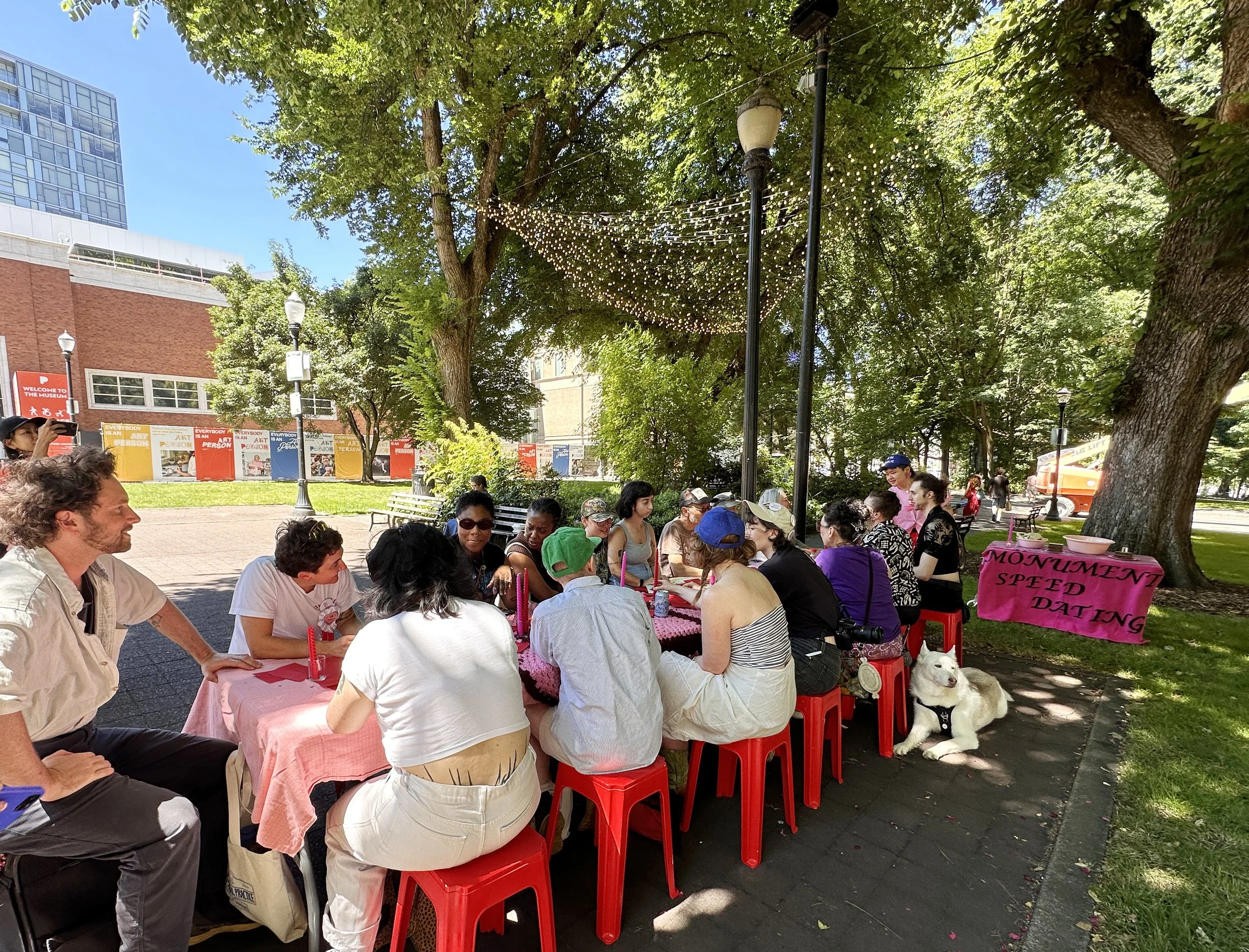
Learning is project-based, conversational, and connected to real-world contexts. Each term blends seminars, fieldwork, collaborative projects, community partnerships, and independent research. Weekly meetings emphasize dialogue and shared inquiry rather than traditional critique.
Projects often extend beyond the university through long-term community relationships. Publishing, documentation, and archiving are part of the curriculum. Learning also includes occasional program activities—such as short retreats or group trips—that support research, reflection, and site-based engagement.
The program holds an annual fall retreat near Portland and a spring research trip to another U.S. city. Recent destinations include Houston(2026), New Orleans (2025) and Pittsburgh (2024).
Collaborative Partnerships
Students work directly with community-embedded projects and partner organizations.
King School Museum of Contemporary Art (KSMoCA)
A contemporary art museum inside Dr. Martin Luther King Jr. School (PreK–5). Programs are co-developed by students, teachers, artists, and PSU graduate students, creating opportunities for cross-age collaboration, creative inquiry, and reciprocal learning.
A long-term partnership initiated by faculty member and program alumna Emily Fitzgerald. Graduate students collaborate with older adults through intergenerational, community-based projects rooted in conversation, care, and mutual learning.
Past Partnerships Include:
Columbia River Correctional Institution (CRCI)
City of Portland
Portland Art Museum
British Council Artist Exchange
Local schools, nonprofits, and cultural institutions
Program Features
The program includes several unique components that support student learning, research, and public engagement:
Social Forms of Art (SoFA)
An online journal produced by the program, supporting writing, documentation, and commentary on socially engaged art.
Teaching Opportunities
Graduating students are offered the opportunity to design and teach their own class.
Graduate Project & Lecture
Each student develops a substantial graduate project and delivers a public artist lecture reflecting on their work in the program.
Graduate Publication
Students create a graduate publication that contributes to the program’s growing body of work on socially engaged art.
Assembly: A Social Practice Conference
Hosted every Spring, Assembly is a co-authored conference featuring workshops, lectures, participatory projects, and community engagement.
Visiting Artist Program
Brings artists and scholars to work closely with students, offering sustained mentorship throughout the year.
Art & Social Practice Archive
Housed in PSU Library Special Collections, this is the first public archive dedicated to ephemera related to art and social practice.
Opportunities for Students
Students gain experience in:
Collaboration with communities and institutions
Designing and facilitating socially engaged projects
Publishing, documentation, and archiving
Teaching, mentorship, and workshop design
Participatory and dialogue-based methods
Local and international field research
Who This Program is For
Artists, educators, organizers, designers, researchers, and others interested in connecting art with public life, collaboration, and civic engagement. We welcome applicants from diverse backgrounds and experiences.
Outcomes
Graduates leave with:
A comprehensive portfolio of socially engaged artwork
Experience with community partnerships and organizational collaboration
Strong facilitation, communication, and research skills
A network of partners and peers
A sustainable, adaptive artistic practice
Apply to the Program
The program accepts five students annually. Applications are due in the first two weeks of January. Prospective students are encouraged to contact the program and arrange a visit, either in person or virtually.