
Thank You My Father’s Hands or, the Beauty of What is Near
Text by Sarah Blesener with James Blesener
“It’s not just about the art making. Or the memory. Or the feeling. But the fact that making an image leads to a memory that connects to a feeling that situates us in the present again. The art has been a way to connect. And it’s not really about the art. The art is a vehicle to make sense of and to sense your memory, your life, your relationships again.” -James Blesener
When I was younger, I used to dream that my father was the big dipper and I was a dark star nuzzled under his chin. I press my ear to his neck and listen to the sounds of Lake Superior, the rhythmic and cold chill of the waves. In the dream, I become the young boy inside him - I have his eyes welling, his crawling, I am him running from school, I am his face bruised - and I spin his sadness like yarn into a sock - I wear it on one foot, and limp home unevenly.
Last year, my father lost his son, his sister, and his father. I am seeing the roles of father/child/son/brother/parent collapse and collide in him. Time is now layered, it’s not linear - I see him as all of these at once, folded in on each other.
After my brother died, my dad shared with me a dream he had where there was a sort of red glow coming from underneath a door. He sleep runs, slowly, the red pulls him in. But he always arrives too late. My brother was there, but now he’s gone. The red glow appears in other dreams. I start to see it everywhere in my waking life. I begin to photograph it.
In my own dreams, it’s the sound of my brother’s voice - he says “Hey sis” over and over until it's just tzzzzz -vibrating like violin strings unbound. When I wake up, I take apart my childhood violin. The wax and resin I start to drip on my archival photographs. I burn the strings, I melt the wax. I pour it on the image.
These ‘dream exchanges’ have what I call a reverse-telescope effect. They allowed me to start to see the beauty of what is near, through the glass of this internal logic of the visual symbols and language of my dad’s dreams and memories. For the last two years, my family and I have been photographing, writing, dreaming, crying, struggling, and moving towards one another. Art has become an excuse for that act of reaching towards, of touching what cannot be said directly.
What follows is a conversation between my dad and myself that lasts just long enough for judgement to be suspended, for us to start circling our various degrees of complicity and our relation to accountability, to love, to the past, and these tangled social complexities we share together.
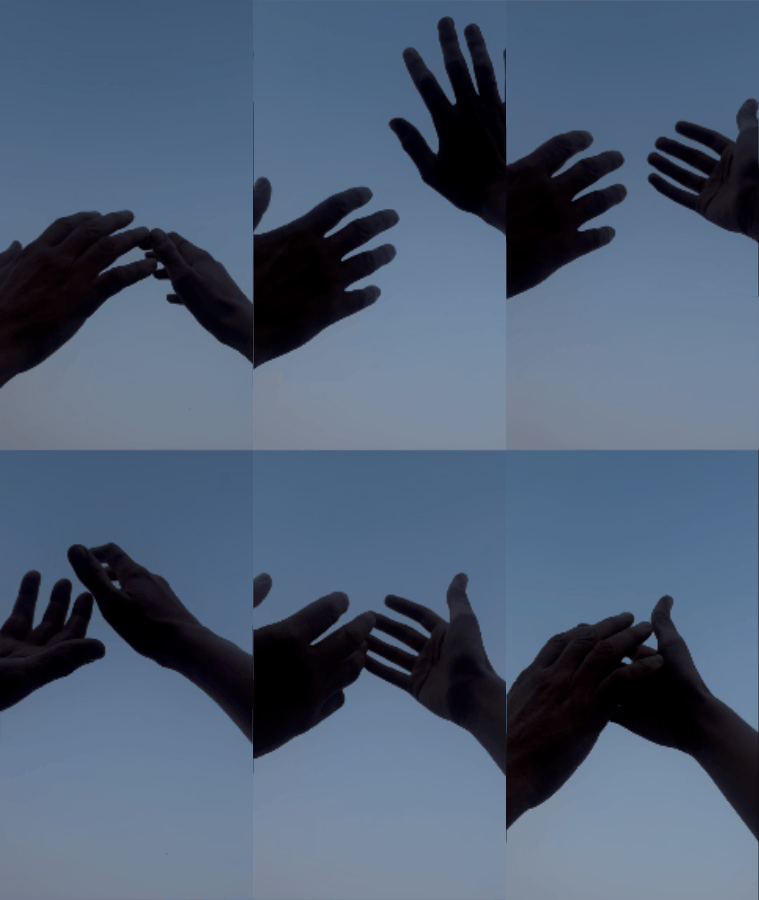
“My daughter and I hold hands together on the rocks of the shore of Lake Superior after my dad’s funeral. We found these nice rounded stones that had worked their way to the shore over thousands of years of natural processes to evolve into this beautiful smooth stone on the warm sunny shore. We tossed them back deep into the water calling out, ‘Life can be so unfair - good luck making it back to the warm shore.’ It felt healing as we needed to make it back to our warm shore as well….” -James Blesener
James Blesener: Do you remember the game we used to play at the dinner table, when you guys would tell stories to help build my memories back in my head?
Sarah Blesener: …no? What?
James: I don't know if you remember, but I had a bad concussion when you were younger, and I lost many of my memories. All the dots were not aligned and they weren't connecting. I had some random memories but I couldn't remember the details, and half of it was gone. As we told those stories, which became this sort of memory reconstruction game, it kind of sunk in, and I rebuilt my brain. I rebuilt those memories.
And those rebuilt memories feel real to me. It might be missing things, but it feels real.
Sarah: I don’t remember that at all. But I wonder - how does that feeling of fracturing memory and reconstruction feel now, in the context of you and your grandson, Grey? He looks so much like Daniel, and you're doing similar activities that you did with Daniel… seeing you guys bike around the neighborhood together, seeing him lay on your lap… it feels like watching a scene that already happened replay itself, only slightly off…it’s jarring. Does it feel like the past repeating itself, or is it something different? Do the memories start to blur together? What does this overlap and repetition do to your memory?
James: No matter what I say for that answer, there's one truth that I can't avoid thinking about, and that is I call Grey Daniel every single day. Hey Dan. Hey Dan. Hey Dan. Hey.
Sarah: Before we get deeper into this - for those who don't know our situation, who may not have the context that we do… Can you explain how we got where we are right now? What is happening?
James: Yeah, absolutely. A couple years ago, on December 27th, my son, Daniel, passed away unexpectedly. At that time, he had a seven-year-old boy. That’s Grey. Grey was grieving in a way that others didn’t understand. His mom and dad had already been split up for a long time. So his mom… she lost a husband, but she'd already said goodbye to him through their divorce. But Grey lost a father, and he was losing part of his routine at his father's house. So we decided at that time it'd probably be beneficial to Grey if my wife and I stepped in and kept up those custody hours his dad had. Since that time, that has grown from Thursday for a couple hours, to Friday, Friday night, Saturday, Saturday night, Sunday, trips, holidays, all the rest of it.
So in essence, we have gone from grandparents … to grandparents that also have taken on parenting roles, because now we're with this boy at least three days a week and on vacations and trips.
Sarah: Dad. There is so much I want to ask you. Let’s go back to this idea of return and memory. A lot of the work I've been doing and thinking about has to do with returning to something and revisiting the past…the circular pattern of that. I find that to be really interesting in art and it’s a big part of my life in general, as you’ve seen these past years. I’ve been thinking about you and the experience you're having right now of re-parenting - is that even the right word?
James: It does bring you back to a certain mentality and thought process. He looks like Dan, he acts like Dan, he's intense like Dan, he wants to play in rough ways like Dan…but he's Grey. He's his own independent person.
It definitely brings me back. Daniel was extremely high energy, without a lot of friends. He had a smaller core friend group, and he liked to be roaming and bike riding and playing baseball and doing sports. And Grey is similar. Daniel didn't want to read. Grey is not a huge reader. We're trying to work on that with him. So those two look alike, they act alike, they sound alike. Even sometimes Grey can be manipulative and it's like, oh my gosh, I feel like I'm relating that with Dan. Grey and Dan said the same things to me.
So, there is a huge tendency to remember that past, and that gives you a chance to ask yourself - what did I do back then that worked and didn't work? What would I change? I have a different viewpoint now. I'm looking at the outcome of parenting 30 years later. When I was parenting my children, it was my best guess. I didn't know. You don't know as a parent. It's trial and error and learning.
Not that I know now, because I still don't know. Nobody will ever know. All kids are different. All events and situations are different. But I have a different perspective now, having done it and watched it. I put an amazing amount of effort into certain areas of my children's lives, and when I ask them about it now, none of them remember those areas I was so focused on. And then things I thought weren't important, all the children seem to remember! There was a certain pattern of things that happened that they remember and that they don't. So I'm trying to use that now.
The return… it definitely brings you back to Dan and brings you back to parenting. And you know, I think there's another thing too. It's subtle, but I'm grieving the loss of Dan. And then in psychology, in the Bible, wherever you get your resources - for me, the knowledge of survival tells you if you really want to heal your heart, start being of service to other people. That’s the only thing that’s gonna help. Get out of your own skin and serve. Do something for somebody else, and you inherently will feel better. You don’t feel better and get better by trying to fix yourself in a vacuum. It’s only by taking your hands out of your pockets, getting out of your door and into the lives of others in a real way - that’s how you heal. We need each other.
So, Grey said to me one day - “Papa Jim! You're blessed, you're so lucky, you have me.” And I asked him why, and he said, “Because I'm helping you grieve your son, you're helping me grieve my Dad! We have each other. You're really blessed. You're lucky to have me.” He's a 10-year-old boy, but it's very true.
Sarah: I have so many questions and thoughts around this, but we talk a lot about how things don't turn out ever how we plan, and yet we spend our whole lives trying to make things happen the way that we want them to. So much energy is wasted on trying to control the things around us. And surrender usually comes in the darkest times, the rock bottom we know from recovery language.
So, I’ve been thinking about what happens when our roles and identities break down - when our identities start to fracture, and what happens as a consequence of that. In your case, in the course of six months, you lost your son, and then your dad, and your sister. All those roles that we rarely question… the role of son, father, brother - all of those identities were stripped away really damn fast. How has that changed you? How has that changed your view of yourself and how you move through the world?
James: Ha. Okay. So that's gonna be a long-winded answer.
When Daniel passed away, it put me and Linda, my wife, and the whole family into a spot where we had to take on new roles, new priorities and new objectives. No choice. And this phrase just kept running through my head: duty before desire. There are times in life when we're called to simply just the concept of duty, to do something for the better good of all that maybe isn't fun or the best for ourselves.
And I knew I was gonna lose some freedoms, and I was gonna lose some finances, and I was gonna lose some time, I was gonna lose some energy, but I think we're all called to serve each other, especially in family…to be there for each other, to love each other, to support each other.
Another thing that's been coming to my mind over the last few years is, as we age, we get a little bit more self-centered. I hate to say that as a general term, but that's my observation for me and other people that I've known. And I've noticed that might have been happening a little bit with me… self-centered, self-serving, you name it, whatever that self was. But since Dan has passed away, that has gone away.
That's a very, very deep, good question to think about… because you can no longer be the same selfish person. There are other people who have needs. One week it might be a spouse, another week it might be a grandson, another week it might be a child and a sibling.
And it's hard to fathom. I know how I'm grieving, but I can't possibly know, Sarah, how you're grieving. You lost your brother. You two spent more time together than I did with Dan. And I spent a lot of time with Dan, but it pales in comparison to you and Angela and Dan, the time you siblings spent together.
So your question is, how does that change us? And how did that change me, in terms of priorities and worldview and all the rest of it? It slapped me and said, HI BUDDY IT’S NOT ALL ABOUT YOU.
Sarah: Yeah, it's interesting, because I asked about roles, but it sounds like, from what I'm hearing, in your perspective, the fact of even having or claiming a role centers you in the narrative, and then when you lose that role, you get a chance to also decenter. Or.. you are simply decentered and you have to accept and deal with what that means and opens up. It's not just about losing a role, it's like you're no longer at the center of your world. And maybe those roles aren't just no longer there but they lose their meaning in a sense. It's like the letters kind of change around. That makes a lot of sense. I hadn't thought of it that way. I was using the language of roles but maybe it’s more about this language of how we center ourselves, where we place ourselves in the narrative we tell ourselves.
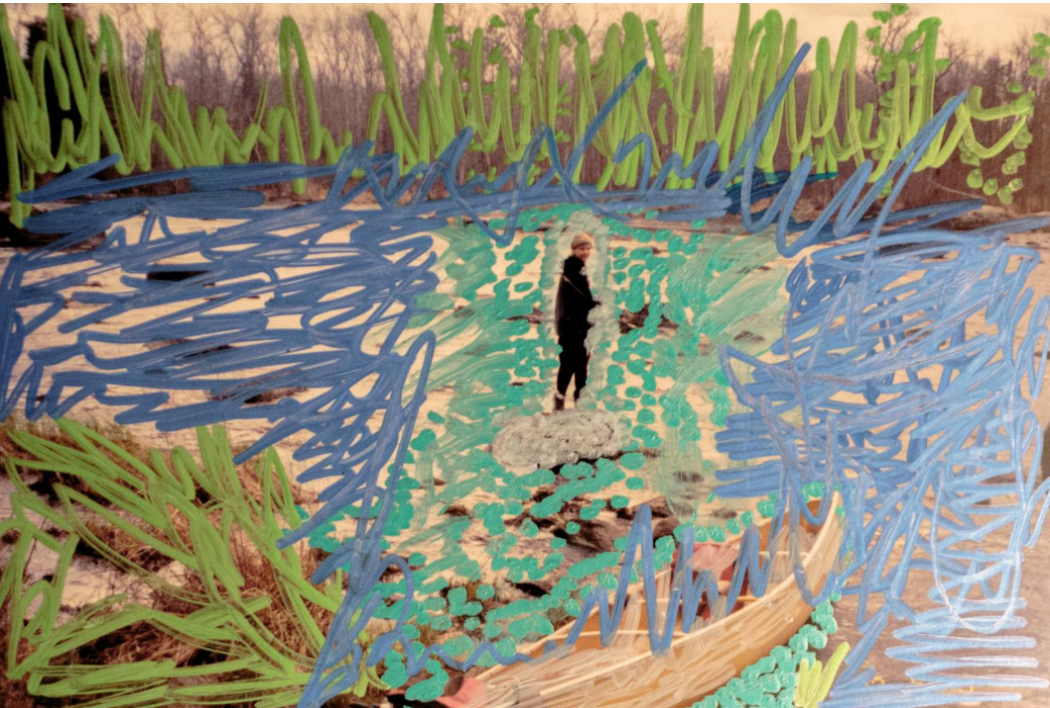
Images of my late brother, Daniel, from our family album
James: Exactly. Roles should only be used as a verb. To role. To role is to center yourself in a position of a story that you tell. But when it crashes - damn it rocks your world. It turns it upside down, flips it on its head and smashes it. And then how you deal with that… it's gonna decenter your world. Everything changes, and there's no going back to how you "roled."
Once you realize that life has changed, it will never be the same. The sooner I accept that and deal with it and take joy in it and try to grow into that new de-role, that new decentered space of life…because it simply has changed…the better I will be in getting through my grieving process, which I believe may never end, but at least I'll be taking steps toward it.
Sarah: So, since Daniel died, we’ve been making a lot of art together. And you've been at the center of a lot of it. We photograph together a lot. I’m constantly affronted with people not understanding how I could work with my family like this, or why my family would agree to do this. Which in turn surprises me. You're all wildly open to trying out these weird experiments, like the dream photography, photographing at the funerals and all of our rituals and memorials, family photographs and letters and writing prompts…
From your perspective, what has that all been like for you? Does art matter in all of this? I’m struggling lately with what the art of it all means - maybe you can help me. Art being something that helps accompany the return…as in… the act of not just returning to parenting, but returning to memory, and using this coded language between us, like the way that we used colors from our dreams, and making art as a way to return to something together?
James: I think that having art as a way to find and express this unspeakable emotion in the moment as it unfolds itself is extremely, extremely important.
So you could take 10 million poems, 10 million books, 10 million songs - the fundamental thing that a lot of them are saying is, as we get older, we sit in the present and talk about the past. Your world gets smaller and you're unable to do things. I experienced this with my own dad. Your world gets smaller and your past gets bigger, because you start living through memories of the past instead of hopes for the future.
So watching my dad, and then working with you on the writings and the photography and the images…to me, it's taken on a whole new meaning. But the memories, the way we are using and making them, are not just a snapshot - it's a grasping of a moment that writes a different picture in my head, a picture that is also a feeling. So when I do these things with you, there's a corresponding image that brings back a memory that also now brings back a feeling.
Does that make sense? It’s not just about the art making. Or the memory. Or the feeling. But the fact that making an image leads to a memory that connects to a feeling that situates us in the present again. The art has been a way to connect. And it’s not really about the art. The art is a vehicle to make sense of and to sense your memory, your life, your relationships again.
And it’s not even about processing or healing grief. I see this like the science and engineering and mathematics of working with memory. And there’s something here about not doing the art alone, kind of like how I was talking about how you only really start to “heal” when you get out of your head and on the ground and in the room with another person you can be of service to.
It’s not just about grief, about Dan passing, but how important those memories and images become, because that's all we have now. There is no future. There is not going to be talking to Dan. There is no “I get to see him again.” I only have the past. So those artistic moments of working with the past - yeah, they're very important. They're very, very special. What else can I say? You get it if you are in it. If not, I don’t wish you to get it.
Sarah: Yeah, it's like if we only have the past, what do we do with it? And why does it never really feel like the past? How do we work with it in a way that is meaningful?
Okay, does the dinner table game of memory reconstruction connect to what you were saying with your interpretation of what the art-making feels like to you? How the point isn’t really the art-making at all, but it’s about our connection to our memory, and our connection of our feeling of our memory to the present? The fact it requires other people, other members of our family/community to be a part of this dot connecting?
Maybe it’s like we are still playing that dinner table game as adults, helping each other connect the dots that come from all these ruptures and loss, and not just connecting them, but connecting the feeling of them, creating this language and world?
James: Yeah, exactly. The dinner table game is what the art is trying to do. Just have a concussion and ask your family for help and I guess that distills the function of art.
Sarah: Do you have any advice for other families going through this?
James: Sure. I mean, I would definitely not consider myself well-versed in giving anybody advice, because the world is a tough, complicated, harsh spot. There's so many things going on.
But I do know since Dan passed, growing together as a family… I think as a family, we've been there together. I can picture moments of just emotional breakdown, of sadness for one person in the family, and the rest of them loving on them and holding them and meeting them where they're at, not rushing them through their grieving, not being frustrated by their emotions and grieving, but just meeting them there.
And to me, that's a beautiful moment of love.
So then that kind of carries forward to Grey. All that matters is to try to understand that person and meet them where they're at, not where I want them to be. That’s changed a little bit because of the family trying to meet me where I'm at, not trying to change me, to let me grieve, to let me laugh. Sometimes, if I'm not that emotional, the family says that's acceptable, they're okay with that. Or if I'm emotional, the family says that's acceptable, they're okay with that.
So, it kind of helped me meet Grey where he's at, to not want him to be what I want him to be. It changed that in how I love and parent. I mean, I always had these goals with Dan…. like, “this year we're going to work on coordination, this year we're going to work on physical strength, this year we're going to work on reading.” And when Dan got older, I don't know if any of those goals made a difference. So with Grey, my expectations…. I've tried to adjust those to who he is and where he's at, not who I am and where I'm at. If that makes sense? That changed in a real way. Expectations vs loving someone for who they are.
When I raised Dan, I had fears of certain things, of who he could be in the world, and I pushed, I would say, a little bit into who I wanted him to be. And with Grey, I'm looking at more… Who are you? Who are you as a boy, and how can I help you be the best version of you within reason? My definition of what I want to breathe life into has widened. I'm not as worried or concerned, if that makes sense.
Sarah: I don’t want to cry, that’s so good. And what can kids teach us about grieving? I mean, what has Grey taught you in the past two years?
James: Thatdeath isn't scary, and that loss isn't scary. He’s taught me to talk about it, to remember his father, to talk about the good times, to just turn a song on as loud as we can when we're angry and scream at the sky in the car, where you can get away with it. The rest of the world passes by onto their busy whatever - they have no idea that in this little vehicle, this sound box, we are screaming in motion, crying, making fists at the sky together.
Sarah: I love you.
James: Love ya kid.
————————————
James Blesener tries to live by: God has a plan and I do not get to know it - I’m here just stumbling through it one day at a time or sometimes one hour at a time, as a day seems unfathomable and too hard to envision.
Sarah Blesener tries to live by: Keep on waking up, really waking up.
